“`html
Top microSD Express Cards for Nintendo Switch 2 Storage Expansion
The Nintendo Switch 2 has revolutionized the gaming experience by introducing a new standard for storage expansion, requiring microSD Express cards. These cards differ significantly from traditional microSD cards, offering enhanced performance that caters to the growing demands of modern gaming. As game sizes continue to increase, expanding storage has become almost essential for players. This article provides an in-depth overview of the best microSD Express cards available for the Nintendo Switch 2, along with technical insights and market context.
Understanding microSD Express Cards
MicroSD Express cards are the first of their kind in mainstream gaming devices, integrating advanced technology that allows for faster data transfer rates compared to traditional microSD cards. Utilizing the PCI Express (PCIe) and NVMe interface, these cards can significantly reduce loading times and improve overall game performance. This technological leap is particularly important for the Nintendo Switch 2, which supports games that demand high-speed data access.
Performance Overview
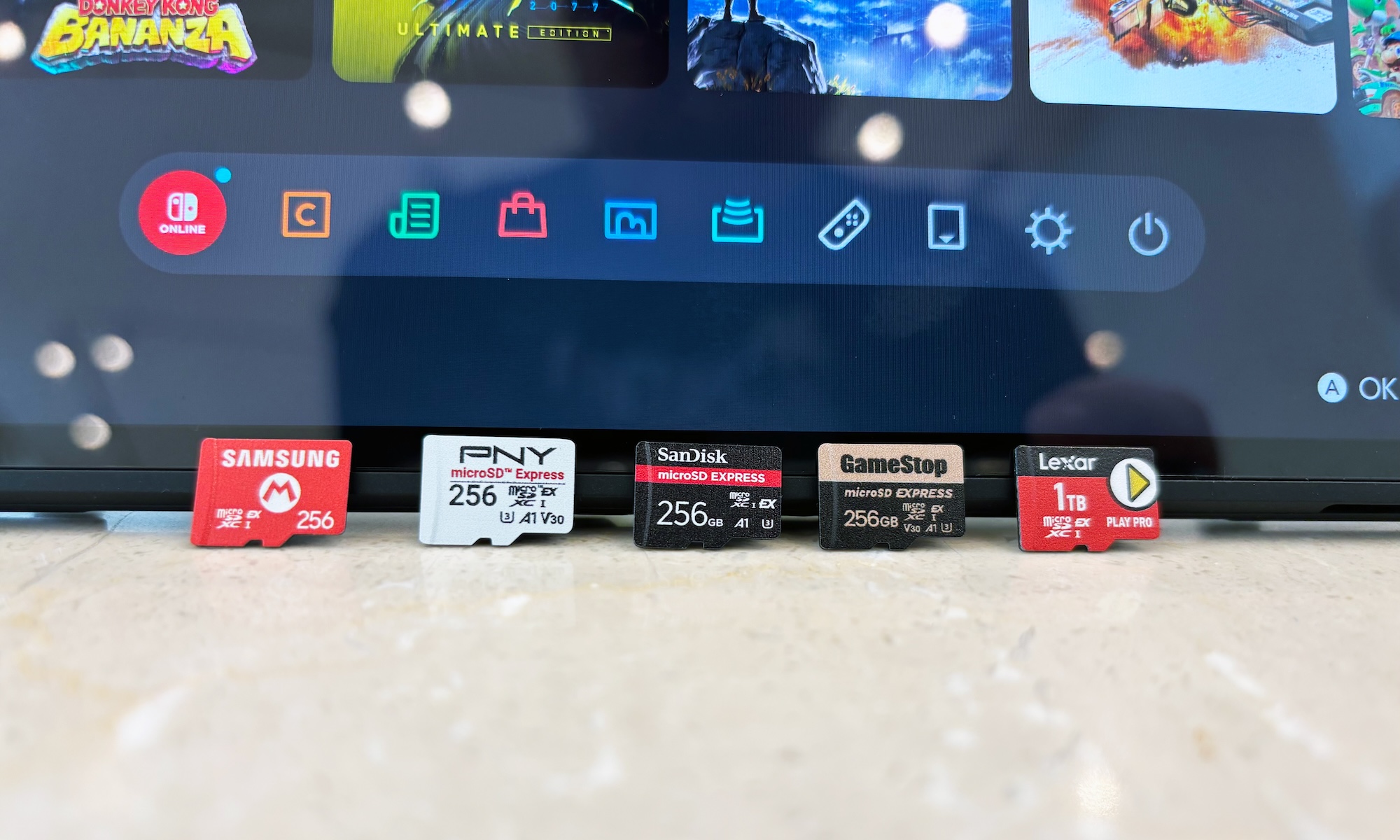
As of now, the options for microSD Express cards are somewhat limited, but several models have been tested for performance and compatibility. The following cards are currently available for the Nintendo Switch 2:
- SanDisk microSD Express Card
- Lexar Play Pro
- Samsung microSD Card for Nintendo Switch 2
- Samsung P9 Express
- PNY microSD Express Card
- GameStop Express microSD Card for Nintendo Switch 2
- Onn microSD Express Card
Among these, the SanDisk microSD Express Card stands out due to its consistent performance in loading times and data transfer rates. The 256GB versions of these cards were primarily tested, except for the Lexar Play Pro, which was evaluated in its 1TB variant.
Performance Analysis
In various tests, all five cards demonstrated similar load times for popular games such as Mario Kart World and Cyberpunk 2077. For instance, loading the digital version of Mario Kart World took between 18 and 20 seconds across the tested cards, while accessing the first Grand Prix race averaged about 6.5 seconds. In Cyberpunk 2077, loading a save in a demanding area like Jig-Jig Street took between 26 and 29 seconds, with the Onn card lagging slightly at around 31 seconds.
These results suggest that while there are minor differences in performance, they are often negligible in gameplay scenarios. It’s important to note that the Switch 2’s internal storage was consistently faster than any external microSD Express card, reinforcing the idea that for optimal load times, utilizing the console’s built-in storage is preferable.
Best MicroSD Express Cards
For those looking to purchase a microSD Express card for the Nintendo Switch 2, the following options are recommended based on performance, capacity, and pricing:
- SanDisk microSD Express Card: Priced around $64, it offers strong sequential read and write speeds, making it a reliable choice.
- PNY microSD Express Card: Available for approximately $48, it provides good performance at a competitive price.
- Samsung microSD Card for Nintendo Switch 2: Retailing for about $60, it is designed specifically for the console, ensuring compatibility and performance.
- Samsung P9 Express: Priced around $55, it balances performance and affordability effectively.
- Lexar Play Pro: At about $60, it offers a larger capacity option with solid performance metrics.
- GameStop Express microSD Card: Available for $60, it is a rebadged version of another model but still performs adequately.
- Onn microSD Express Card: The most affordable option at around $47, it is suitable for budget-conscious consumers.
While the SanDisk card is the fastest among the options, its price point may not justify the marginal performance gains for most users. The differences in load times are often imperceptible during regular gameplay, making affordability a significant factor in purchasing decisions.
Market Context and Future Considerations
The microSD Express cards available today are relatively expensive compared to traditional microSD cards. For context, a standard 128GB microSD card can cost as little as $17, while the equivalent microSD Express cards start at around $48. The price disparity is attributed to the advanced technology and performance capabilities of microSD Express cards, which utilize the PCI Express (PCIe)/NVMe interface for faster data transfer.
Nintendo has indicated that the Switch 2 supports microSD cards up to 2TB, but currently, only a few options reach the 1TB mark. As more manufacturers enter the market with competitive pricing, it is anticipated that prices will decrease over time, especially during sales events like Black Friday and Cyber Monday. It is advisable for consumers to evaluate their storage needs carefully before making a purchase.
If immediate storage expansion is necessary, any of the recommended microSD Express cards will suffice. However, for those who can afford to wait, monitoring for price drops and new releases could yield better options down the line.
Conclusion
In summary, the transition to microSD Express cards for the Nintendo Switch 2 represents a significant upgrade in storage technology, catering to the evolving needs of gamers. With various options available, consumers should prioritize performance, capacity, and price when selecting a card. While the SanDisk microSD Express Card is a top performer, other models provide excellent value, making it easier for gamers to expand their storage effectively. As the market continues to evolve, players can expect even more choices and potentially lower prices in the near future.
“`